Best Way to Keep Dogs From Barking in the House
 Barking dog driving y'all crazy? Your domestic dog might exist barking for various reasons, and barking is a natural canis familiaris behavior — just like talking is for humans! All dogs volition bawl (or yodel if you accept a Basenji), but in that location are things y'all can practice to minimize nuisance barking.
Knowing the why behind your dog'due south barking will help you better manage their environment and train them to be quiet when needed. Let's look at the unlike kinds of dog barking and what you can do for each type.

Alert Barking
Warning barking is your canis familiaris saying "Hey! There's something there! I see something!" Others might hear a canis familiaris downwards the street or in a grand nearby that barks first, and they answer with a "I hear you!" Many domestic dog owners appreciate when their dogs alarm them to someone approaching the front door. If you have a dog who barks at any and everything outside the window, this can go quite frustrating.
Alert barking tin be especially tough for those that alive in apartments or have neighbors close-past. And flat living often ways that a domestic dog volition hear more sounds exterior and, without proper acclimation and training, will bark to warning their people.
Watch this example of warning barking starring Marshall and Mabel:
My dog volition bark when she hears someone knock on the door, and I do allow her one or 2 barks earlier proverb, "thanks!" (which is her "serenity" cue). When humans domesticated dogs, alert barking was a desired trait. We wanted our dogs to tell united states of america if someone or something was approaching. Expecting our dogs non to follow this natural instinct is a tough inquire. Still, you can lessen alert barking in three ways. For an in-depth look at alert barking training steps, read my article "Alert Barking: Your Canis familiaris's Equivalent to 'Become Off My Lawn!'"
Remove the Opportunity to Alert Bark
Close your blinds or curtains to remove any visual triggers that cause your dog to bark. If your dog alerts to noises outside, ready a fan, noise machine, or turn on the radio or tv set to drown out the noise. This is called noise masking. Some dogs similar to perch by the window to watch the world get by — if they alert bawl from their perch, move the furniture abroad from the window then they can't settle at that place to keep picket. If you don't feel like rearranging the furniture, simply block off their access to that room with a gate.
Teach Your Canis familiaris the "Quiet" Cue
Take reward of your dog's barking to teach them to be quiet. By teaching what'south called "paired cues," you tin can quickly railroad train your dog to both speak and exist placidity during the aforementioned training session. Read our footstep-past-footstep instructions for education your domestic dog the quiet cue here.
Watch this video from Zak George to see paired cues in action:
Acclimate Your Dog to Sights and Sounds
If your dog alert barks, you can desensitize and counter condition them to the particular sights and sounds that trigger their barking. Some dogs have an easier time getting used to new sounds, while others need more time to learn. Work on creating a positive association with sights and sounds at which your canis familiaris would usually bawl.
Allow's use the example of someone walking by your habitation. When you're not grooming, brand sure you've fatigued the defunction or blocked your dog's ability to see someone passing past. When you're actively training, grab a few loftier-value training treats. The instant your dog notices the person, just before they begin barking, say "yep" (or click if yous use clicker training) and requite them a care for. If they wait correct back at the passer-past, say "yeah" or click over again before they bark, and give another treat. With practise, y'all volition take trained an incompatible behavior to alert barking (looking at you and keeping their mouth shut). Plus, you've now created a positive emotional reaction to seeing someone walk by. It'south a win-win!
Click hither for detailed instructions on acclimating your canis familiaris to sights and sounds exterior the window.
Territorial Barking
Territorial barking is similar to alarm barking. Your domestic dog is responding to the presence of someone or something virtually their habitation. Territorial barking intends to protect the area and make the "intruder" leave the premises. While alert barking might stop after you've been made enlightened of what's happening, territorial barking commonly lasts longer — until the perceived threat is gone.
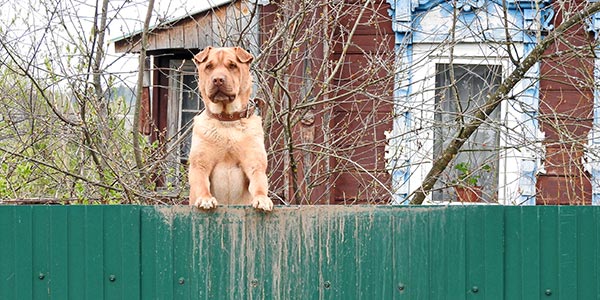
Territorial barking is what we call "self-reinforcing." Barking unremarkably makes the thing your domestic dog is barking at go abroad — the behavior is successful for your dog! They learn that their barking makes the thing they wanted happen, and are more than likely to do the same matter side by side time. For example, your canis familiaris might be home lonely and watching out the window.
They see the postal worker walk past your home on the sidewalk and begin to bark. While the postal worker was already planning on walking by and "leaving" the territory, your domestic dog doesn't know that. They're making the association that their barking fabricated the postal worker leave. The dog is thinking, "mission accomplished!"
Training a dog who engages in territorial barking is the aforementioned as alert barking training (click here to read these training steps). You want to teach your dog that it's okay when someone (or something) is on or well-nigh their territory, and y'all can exercise this by creating a positive clan with its presence.
Play and Excitement Barking
Many dogs bark out of excitement or during play. Play barking tends to be higher pitched than other barks. I exercise not worry nigh training play barking behavior unless it's a nuisance to the other dog that's playing, hurts my hearing, or results in complaints from neighbors. Expecting a happy and exuberant canis familiaris not to vocalize during play is similar asking children to stay completely silent while playing together on the playground. Nevertheless, having a solid "quiet" cue trained is always useful when the barking gets to be too much.
 If you need to curb your domestic dog's excitement or play barking, it'south all nearly management. If a particular type of play, such equally chase, tends to increase barking, interrupt your domestic dog before they start to run. Requite them another game to play, such as tug with you or playing with a flirt pole. If they're just then amped up that they tin can't settle into more quiet play, end the play session and give them an interactive toy or puzzle. This blazon of mental enrichment goes a long way in burning energy and, since their mouth is busy working on a blimp KONG or another toy, they tin't be barking at the same time!
How to Train Calm and Repose Greetings
Some dogs begin to bark out of excitement when approaching other people or dogs while out on a walk. This can exist quite intimidating for others, especially since it's often accompanied by pulling on the ternion or rushing up to them. Focus on rewarding what you lot want your canis familiaris to do instead of barking — walking calmly and quietly to greet someone.
- If greeting the person or dog is safe and advisable (ever bank check with them commencement!), merely allow your canis familiaris to arroyo if they are quiet and non pulling on the leash.
- If they start to bawl out of excitement, stop your approach, and redirect their attention dorsum to y'all. Yous tin can do this with name recognition, the touch cue, or the sit cue. Y'all might need to employ a training treat to get their attention and lure them to focus on you. If they are successful in refocusing and cease barking, proceed to arroyo for a greeting.
- If your dog has trouble paying attending to yous and keeps barking, turn and walk away from the person or dog they desire to greet. At the distance that your dog can focus on you lot, stop and endeavor the approach once more. Consider using a higher value of preparation treat to keep your dog'due south focus while you approach or enquire for unproblematic cues (similar those mentioned in pace two) before in the procedure. You want to set your dog upwards for success and not completely take away happy greetings of other people or dogs.
- This do teaches your dog that approaching calmly and quietly = getting to greet that person or dog! Barking or pulling = the person or dog they want to greet gets farther away.
This does take practice and repetition for your dog to learn. I recommend request a friend or neighbor to aid and be your "decoy," as this way, you won't feel rushed in the process every bit yous might with someone you pass on a walk. Working with a certified canis familiaris trainer can besides help you troubleshoot and preclude your dog's excitement from turning into frustration (which can get reactive barking, equally explained further beneath).
PRO TIP: If you're working with a friend or neighbour for the above exercise, switch between who is approaching and retreating. Mix it up between you and your dog continuing notwithstanding while they approach you to say hello, and you and your domestic dog are approaching to greet. If y'all're sitting nonetheless while they approach and your dog gets overly excited, they can turn and walk abroad. This is a great manner to generalize the behavior and work on your dog's impulse control. Remember to reward your dog for staying calm and non barking while someone approaches.
Demand Barking
Your dog might be barking because it'due south worked to get them what they've wanted in the past. Similar your attention. Or getting their fetch toy thrown for them. "Throw the ball! Throw the ball! Throw the ball!" This type of barking can exist quite frustrating — trust me, I know. I take a Cardigan Welsh Corgi and she has her demanding moments.
Hither's a video case of Preventive Vet pup Finnegan's demand barking (he wants attention and playtime!):
Oftentimes demand barking stems from excitement barking that has evolved into our dogs figuring out how to train the states humans. They've learned through association that if they bark, we usually await at them. We might inadvertently throw their toy for them when they're barking, effectively rewarding the bawl. If only our dogs weren't so smart! This means that if they're demand barking for your attention, looking at them and yelling NO is, in essence, giving them what they wanted. Y'all paid attention to them, even if in your mind it was negative attention.
In the above video of Finnegan's demand barking, he isn't rewarded with whatsoever attention and he chooses to walk away to find something else to do. Ignoring the bark may work for your domestic dog's demand barking (if you tin can handle existence barked at for awhile), but it'south frequently easier to railroad train preemptively and show your dog what works instead of barking in the showtime place. Let'due south look at how to exercise that.

How to Teach Your Dog Not to Demand Bawl
In some cases, I see demand barking happening during dog-dog play when one dog barks at another to become them to play. In those instances, I simply redirect the barking dog to another playmate that's more interested, or give them something else to do, like a short training session or interactive toy.
If your canis familiaris is demand barking at y'all, think about what it is that they're request for. If it's your attention, make a programme to railroad train a different behavior that is rewarded with your attending. It can exist tough to nail down an incompatible behavior to barking, since a dog can bark while notwithstanding performing different deportment. Practicing your timing is key!
For example, you lot would like your canis familiaris to sit down for attention rather than barking. If they approach you, train proactively and ask for a sit before they begin barking. Once their rear hits the flooring, reward lavishly with praise and attention! If your dog approaches and sits on their own, have an even bigger praise party. If you lot miss the opportunity to reward a repose sit and your dog begins to bawl for your attention, enquire them to sit down to interrupt the barking behavior.
Sometimes even asking for an incompatible behavior to barking just doesn't stop the need barking. Your dog might be overstimulated and non know what to do with all their excess energy. Information technology can help to increase their concrete practise during the day, as well every bit providing lots of mental enrichment to keep their brain decorated.
When Demand Barking Is Warranted
For immature puppies in the middle of potty preparation, pay close attention to any barking or whining — this can betoken they need to get outside to use the bathroom. While it might feel like demand barking, you don't want them to take an indoor potty blow and set back the hard work you've put into house grooming.
Adult dogs might bawl to get your attending if they need to go exterior to potty besides. This has happened to me with my own dogs when they take an upset stomach. I certainly appreciated that blazon of demand barking, as it'south saved me from a messy blow indoors and alerted me to the problem. Watch their overall trunk language for whatever accompanying pacing or panting — my dog has barked and whined at me and then moved towards the door to indicate she needs to become to the bath.
In other cases, what might seem like demand barking to yous might indicate your dog is feeling anxious almost something. This could be something such every bit an approaching thunderstorm (our dogs can sense the change in barometric pressure before storms, or might experience the vibrations of distant thunder through the ground). Take into account the whole motion-picture show when information technology comes to the context of barking to narrow downward what the underlying cause might be.
 Boredom Barking
Bored dogs often bark considering they are under-stimulated. This kind of barking is usually repetitive and has an even pitch and tone throughout. A dog barking because they are bored can last hours if not addressed. Many dogs who bark out of boredom practise this when their owner is away, and many owners don't realize their dog boredom barks until a neighbor complains. Giving your dog appropriate and condom things to exercise while you're home and while you're abroad is the easiest solution to boredom barking.
Information technology's easy to mistake boredom barking for separation anxiety barking, and vice versa. Setting upwards a pet camera to monitor your canis familiaris while yous're away can help you determine whether your dog is bored or if they are barking due to anxiety. Click hither to read more virtually how to apply a camera and how to tell if your dog has separation anxiety.
How to Stop Your Dog's Boredom Barking
Exercise Your Dog
Providing sufficient physical practise can help prevent boredom. If your pup has gotten a adept walk or jog in the morning, they are more likely to nap during the mean solar day while you're at work. Physical practice shouldn't be limited to regimented walks — think about other ways you tin get your domestic dog more physically agile. This might include games of fetch or hide-and-seek, playing with a flirt pole, or chasing a Jolly Brawl effectually your yard (an excellent outlet for herding breeds). Short clicker training sessions are another fantastic way to burn concrete energy while too working your domestic dog's brain.
Need more boredom-busting ideas? Read more than in "x Colorlessness Busters for Your Canis familiaris."
Provide Mental Enrichment and Brain Games
Beyond physical do, your dog'due south brain needs a workout too. Incorporate interactive toys and work-to-eat puzzles to your dog'southward mealtimes. Change upwards your walking routine and go on a sniffari! When you go out your dog home alone, brand sure to leave them with safe and appropriate things to do by themselves. This might be a stuffed KONG or a few different options of chew toys.
Check out our article "Domestic dog Enrichment: Toys, Games, and DIY Ideas" to meet how like shooting fish in a barrel information technology is to provide a mental workout for your pup.
 Set up Up a Safety Space for When Your Domestic dog is Left Alone
Give your domestic dog somewhere to settle quietly while you're away. This helps prevent colorlessness barking, only it also helps preclude destructive chewing or your domestic dog from getting into possibly unsafe situations while home solitary. Utilise a crate if your domestic dog has been crate trained and enjoys spending time in their crate. You lot can also set up a larger playpen or "puppy zone" to give some more than room to move virtually. Larn all about how to ready upwards a rubber space for your dog in this article.
Fearful and Reactive Barking
Many dogs will bawl when they encounter something that worries or scares them. This type of barking is oftentimes labeled as "aggressive" barking and is usually a fear response. Fearfulness-based reactive barking can develop after a traumatic feel or due to a lack of socialization every bit a puppy. In some cases, reactive barking might even be a upshot of frustration and non necessarily rooted in fear.
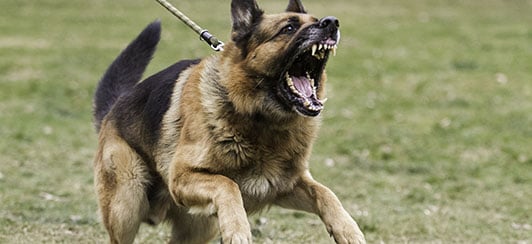
Reactive barking while on leash is more mutual than yous might think — information technology's the most common upshot I work on with private training clients (followed closely by separation anxiety). Many dog owners are embarrassed to have their reactive domestic dog on walks, or worry almost what might happen if their domestic dog gets away from them or an off-ternion dog approaches them.
Leash reactivity and fearful barking are best addressed by working with a certified canine behavior consultant or a veterinary behaviorist. The goal is to change the emotional response your domestic dog has when confronted with their "trigger" for barking. A certified professional volition aid tailor a grooming plan specific to your domestic dog and their triggers and walk you through each stride and then y'all can experience confident when you take your dog on a walk. This blazon of beliefs modification requires:
- Learning canine trunk language
- Environmental management
- Practicing precise timing of classical and operant conditioning
- Confidence building exercises for your dog
- Leash walking and emergency leash handling skills
If you have a dog who is a reactive barker or is barking out of fear, the worst thing you could exercise is punish your domestic dog for barking. I talk extensively nigh the use of penalisation in my commodity "Dog Training Aversives: What Are They and Why Y'all Should Avoid Them." If you punish a dog who is reacting to something because it scares them, adding something unpleasant does zero to fix the underlying problem — in fact, it just adds fuel to the burn.
For example, if your dog barks at some other dog across the street and yous requite them a ternion correction to make them end, what do you think they learned? Meet a dog = neck gets yanked (or a tightening of a choke or pinch collar). Dog = bad things happen to me. While these techniques might work to finish the barking in that instant, all that'due south happened is the suppression of the barking, not treatment of the fearfulness. In farthermost cases, you might cease up with a dog who really does "bite out of nowhere," as their lower-level warning signals have been punished out of them. I cannot stress enough how important it is to piece of work with a certified canine beliefs professional who volition teach you the correct way to manage and change your dog's fearful and reactive beliefs. The potential consequences of incorrect and outdated training techniques tin can be life-altering (in a negative style) for both you and your canis familiaris.
Learn how to screen potential canis familiaris training professionals in our article "What You Should Ask a Dog Trainer (and What Their Answers Should Be.)"
Barking Due to Separation Anxiety

Barking, whining, and howling when left alone is 1 of the most common symptoms of canine separation anxiety. Separation anxiety is a condition where a dog becomes distressed when separated from a particular person or people, and can range from balmy to severe. In more severe cases, a dog might fifty-fifty injure themselves trying to escape and find their owner. Dogs with separation anxiety cannot help themselves and are not "acting out" on purpose.
Separation anxiety barking can be very difficult for domestic dog owners to manage, especially if they live near neighbors (such every bit in an flat). It's also heartbreaking for owners to see their dog so distressed, and in many cases, it feels impossible never to go out the domestic dog alone. Don't lose promise — separation anxiety tin can be treated!
How to Tell if Your Dog is Barking Due to Separation Anxiety
Setting up a pet camera, like a Furbo Domestic dog Camera or Pawbo Photographic camera, makes determining whether your domestic dog suffers from separation anxiety much easier. Having video means you tin monitor what your dog does when they are left lone. What symptoms practise they showroom, and for how long? Do they settle at all while you're gone? Exercise they do okay for a certain amount of time before starting to bark? Are they barking for other reasons too anxiety when lone?
Every bit with fearful and reactive barking, treating your dog's separation anxiety barking will be easier and more successful if you have the help and back up of a certified training professional person and your veterinarian (or veterinary behaviorist). In some cases, anti-anxiety medication can be incredibly helpful in jumpstarting beliefs modification and training, and provide your dog with much-needed relief. At that place are many non-prescription handling options. Your veterinarian and domestic dog trainer can assist you decide what might work all-time for your dog.
Picket this video about how to tell if your dog has separation anxiety and what treatments are available:
More Separation Anxiety Resources:
Preventing Separation Anxiety When Yous Work From Home
How Not Leaving Your Dog Alone Can Help With Separation Anxiety
Home Alone: Why It'south Important to Teach Your Dog to exist Alone
How to Use Music to Calm an Anxious Dog
My Dog'southward Separation Anxiety Journey: How Calmer Canine Helped Mary Berry
PODCAST: Canine Separation Anxiety with Special Guest Dr. Judy Korman
Barking Due to Old Age
Every bit your dog ages, you might notice more barking that seems to happen out of the blue or for no apparent reason. This type of wandering barking could be due to a decline in your dog's cognitive functions. Often referred to equally "doggy dementia," canine cognitive dysfunction is a neurobehavioral disorder that can happen to older pets. Think of information technology as Alzheimers for dogs. Your veterinarian tin can help you determine if your barking dog may exist suffering from cognitive dysfunction, what the best treatment options might be, and what other steps you can have to ameliorate your dog's quality of life as they historic period.
Dogs can have increased barking episodes due to a variety of other medical conditions and problems, also. Dogs tin can bawl as a effect of pain (such as from arthritis), blindness or deafness, elevated claret pressure (hypertension), or even a tumor or increased fluid production around their brain.
A check-up with your vet should be your first step when faced with a dog that'southward exhibiting increased barking, peculiarly when it has seemingly come out of the blue or when information technology's accompanied by other signs, such as changes in thirst, sleep/wake patterns, or the evolution of more aggressive behaviors.
Source: https://www.preventivevet.com/dogs/why-is-your-dog-barking

Post a Comment for "Best Way to Keep Dogs From Barking in the House"